The Challenge
Natus Medical needed to validate marketing claims for their BrainWatch point-of-care EEG system — a rapid-deployment headband designed for emergency and critical care settings. In a competitive market where speed-of-setup is a key differentiator, Natus needed robust, defensible data to substantiate that trained nurses could deploy BrainWatch within a specific time benchmark.
The study required recruiting qualified ED and ICU nurses, providing a controlled testing environment, and managing a protocol that included standardized training, a learning decay period, and timed performance measurement — all in a single day.
What Usability House Provided
- Participant Recruitment — We recruited qualified emergency department and intensive care unit nurses from the Minneapolis area, screened to specific experience criteria including years in ED/ICU, familiarity with neurological monitoring, and prior EEG experience levels.
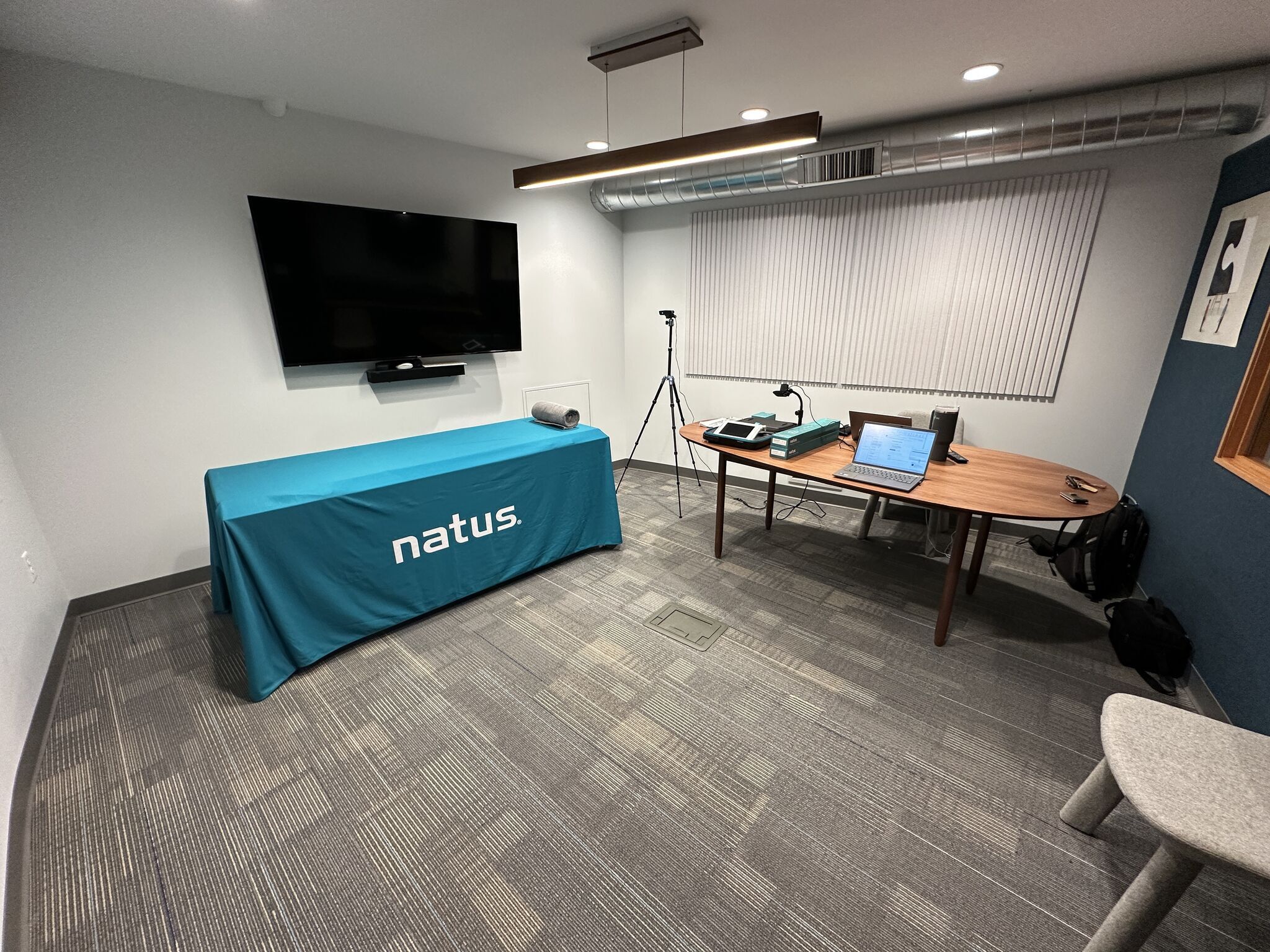
- Facility — The study was conducted at our Minneapolis facility with dedicated lab space configured for the testing protocol, including video and audio recording of all sessions.
- Study Logistics — Session scheduling, participant coordination, training room setup, and management of the learning decay protocol between training and testing phases.
- Moderation — Fully moderated, in-person sessions including standardized post-task interviews with structured questionnaires.
- Final Report — Comprehensive time study report with statistical analysis, individual performance data, and actionable recommendations for marketing claims and training optimization.
Study Design
The study was designed as a fully moderated, in-person time study — not a regulatory usability evaluation, but a rigorous performance measurement exercise to generate defensible marketing data.
New participants received standardized video training followed by a hands-on demonstration, then completed a 60-minute learning decay period before performing the timed setup task. This decay period was critical — it simulated the real-world gap between training and first clinical use, making the resulting data more credible for marketing purposes.
Returning participants who had prior experience with the device completed refresher training before testing, providing a comparison point for experienced versus first-time users.
The Outcome
Usability House delivered a complete time study report with statistical analysis that gave Natus the data they needed to make confident, substantiated marketing claims about BrainWatch setup speed. The report included performance metrics, individual session analysis, and specific recommendations for both marketing language and training optimization.
The study also uncovered actionable insights about the device setup process that informed Natus's training materials — identifying specific steps where users needed additional guidance and where the process flowed naturally.
"Usability House handled everything — from finding the right nurses to running the study to delivering a report we could actually use. We walked in with a question about our marketing claims and walked out with the data to back them up."
Why It Worked
Time studies for marketing substantiation require a specific kind of rigor — not the full weight of a regulatory submission, but enough methodological discipline that the resulting claims are defensible. Usability House brought that balance:
- Right participants — ED/ICU nurses with a realistic mix of experience levels, not cherry-picked experts
- Controlled environment — Standardized training, decay periods, and moderation protocols that eliminate confounding variables
- Fast turnaround — From engagement to completed study in two weeks, with the final report delivered shortly after
- Actionable deliverable — Not just data, but specific recommendations for what claims are supportable and what training changes would improve performance